Leave Your Message
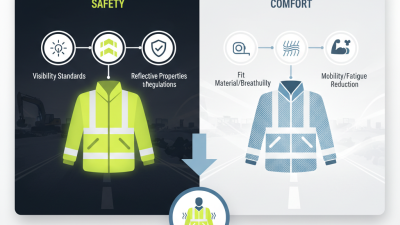
Choosing the 2026 Best Hi Vis Jacket for Global Buyers requires more than comparing bright colors and low prices. Visibility is a safety function, not a decorative feature. Buyers must examine fabric performance, reflective tape width, garment fit, weather resistance, and certified production records.
Safety researcher Dr. Michael Behm has stated, “A garment is only effective when workers wear it correctly and consistently.” That principle deserves attention. A jacket may meet a recognized standard, yet fail in real conditions if its sleeves restrict movement or its zipper breaks during night shifts. Practical details matter. Wet roads. Headlights. Windy loading yards.
This guide evaluates each Hi Vis Jacket through an experience-based purchasing lens. It considers EN ISO 20471, ANSI/ISEA 107, and other regional requirements without assuming one standard fits every market. Importers should confirm the latest applicable edition before ordering. Supplier audits, sample testing, washing trials, and traceable material records add confidence.
Climate changes the decision. A lightweight mesh jacket may suit tropical warehouses, while an insulated version supports cold construction sites. Reflective tape can crack after repeated washing. Bright fluorescent fabric can fade under strong sunlight. These weaknesses are easy to overlook.
There is no perfect jacket for every worker. That is the uncomfortable part. The strongest choice balances protection, comfort, price, supply reliability, and local compliance. Some buyers still choose by appearance alone. That habit needs reconsideration. This comparison aims to help global purchasers make a clearer, more responsible decision in 2026.
What Makes a Hi-Vis Jacket Suitable for Global Buyers in 2026?
A global buyer needs more than bright fabric and reflective tape. The ILO’s 2023 estimates report nearly three million work-related deaths annually, with about 395 million non-fatal injuries. Visibility remains practical risk control, especially near traffic, machinery, ports, and construction zones. A suitable jacket should meet recognized standards, such as EN ISO 20471 or ANSI/ISEA 107-2020. Buyers must check the exact garment class, not just the supplier’s marketing description.
Climate adaptability matters just as much. A lightweight mesh jacket may suit tropical sites, while insulated layers work better in cold regions. Waterproof performance, breathability, seam sealing, and fabric weight should match local weather. Size ranges also need regional testing. Workers wearing thick clothing may require more room than standard charts suggest. Small details matter: adjustable cuffs, strong zippers, usable pockets, and reflective bands that remain visible when seated.
Supply reliability is another deciding factor. The 2024 World Bank Logistics Performance Index shows that international delivery quality differs sharply between markets. Buyers should request test reports, fiber composition, wash-performance results, and production traceability. Certificates can expire or cover only one fabric combination. That is often overlooked. A perfect jacket does not exist; excessive reflective material can reduce comfort, while lighter designs may lose durability. Field trials with real workers reveal problems that laboratory testing may miss.
| Jacket Profile | Best Climate | Visibility Configuration | Weather Protection | Thermal Design | Relevant Standards to Specify | Global Buyer Suitability | Recommended Use |
|---|---|---|---|---|---|---|---|
| Lightweight High-Visibility Shell | Warm, humid, or mild climates | Fluorescent yellow, orange, or red background with contrasting reflective bands; two horizontal bands and vertical shoulder bands are commonly specified | Water-resistant or waterproof shell; specify a tested water-resistance rating rather than relying only on fabric descriptions | Uninsulated; suitable for layering | EN ISO 20471; ANSI/ISEA 107; local rainwear requirements where applicable | High | Road work, logistics, construction, traffic control |
| Breathable Waterproof Hi-Vis Jacket | Rainy, temperate, and coastal climates | High-contrast fluorescent fabric with segmented or continuous reflective tape; reflective details should remain visible when the jacket is worn open | Waterproof construction with sealed seams, storm flap, adjustable hood, and water-resistant closure system | Light insulation or lining; allows base-layer compatibility | EN ISO 20471; EN 343 for protection against rain; ANSI/ISEA 107 where required | High | Outdoor maintenance, utilities, transport, emergency response |
| Insulated Winter Hi-Vis Parka | Cold, snowy, and windy climates | Large fluorescent panels with reflective bands around the torso, sleeves, and shoulders; avoid coverage being hidden by outer equipment | Windproof and waterproof outer shell; insulated hood, storm cuffs, and protected front closure | Quilted or synthetic insulation; buyer should confirm insulation weight and temperature-use target | EN ISO 20471; EN 343 for rain; EN 342 may be relevant for certified cold-protective garments | High | Winter construction, airports, road services, cold-storage yards |
| ANSI Class 3 High-Visibility Jacket | Low-light, high-speed traffic environments | High-visibility background and reflective material arranged to provide enhanced torso, sleeve, and leg-area recognition when worn with compatible trousers | Configuration depends on the garment; specify rain protection separately if required | Available as shell, softshell, or insulated version | ANSI/ISEA 107 Class 3; confirm the required type and supplemental marking for the intended workplace | High | Roadside work, highway maintenance, rail and airport operations |
| EN ISO 20471 Class 3 Jacket | European and international procurement programs | Design must meet the required minimum areas of background and retroreflective material for the selected garment class | Rain and wind protection are separate performance considerations unless additional protection standards are tested | Shell, softshell, or insulated formats available | EN ISO 20471 Class 3; add EN 343 or other relevant standards when weather protection is required | High | Infrastructure, utilities, construction, public works |
| Rail-Specific High-Visibility Jacket | Temperate, wet, and cold rail environments | Fluorescent orange is commonly required for certain rail-sector specifications; reflective layout must follow the applicable railway requirement | Waterproof or weather-resistant options should include seam sealing and a protected closure | Layered or insulated versions for seasonal use | EN ISO 20471 plus the railway authority or infrastructure-owner specification; RIS-3279-TOM may apply in Great Britain | Medium | Rail maintenance, track inspection, signaling work |
| Heat-Reduced Hi-Vis Softshell | Warm and changeable climates | Reflective tape or trim combined with breathable fluorescent fabric; segmented tape can support flexibility and air movement | Wind-resistant and water-resistant; not automatically suitable for heavy rain | Light brushed backing or no insulation | EN ISO 20471 or ANSI/ISEA 107 according to the destination market; verify breathability and abrasion testing separately | High | Warehousing, delivery, construction, outdoor service work |
| Multi-Season 3-in-1 Hi-Vis Jacket | Regions with large seasonal temperature changes | Outer shell and removable inner layer should each retain the required visibility features when used as separate garments | Outer layer may provide waterproofing; verify whether the inner jacket has independent rain protection | Removable fleece or insulated liner; supports flexible layering | EN ISO 20471 or ANSI/ISEA 107; test and label each permitted wearing configuration | High | Global workforces, fleet operations, utilities, municipal services |
| Flame-Resistant Hi-Vis Protective Jacket | Industrial environments with heat or flame hazards | High-visibility materials must be compatible with the flame-resistant garment construction and care process | Weather protection varies; avoid assuming flame resistance provides waterproofing | May include thermal lining for arc, flash, or cold-weather requirements | EN ISO 20471 or ANSI/ISEA 107 plus the specific flame, heat, arc, or electrical hazard standard required by the job | Medium | Oil and gas, electrical work, heavy industry, welding support |
| Packable Emergency Hi-Vis Jacket | Mobile teams and emergency kits | Compact fluorescent shell with reflective bands; visibility must remain effective after repeated packing and unpacking | Usually water-resistant or lightweight waterproof; confirm durability and seam construction | Uninsulated; intended for short-term or emergency wear | Applicable EN ISO 20471 or ANSI/ISEA 107 requirements; confirm packaging and care-label requirements for the destination market | Medium | Vehicle emergency kits, inspections, events, temporary work zones |