China Top Hi Vis Shirts Manufacturers for Global Buyers
Choosing reliable Hi Vis Shirts manufacturers in China requires more than comparing catalog prices. Global buyers must assess fabric performance, reflective visibility, factory capability, and documentation before placing an order. A bright sample may look convincing under warehouse lighting, yet perform differently after washing, outdoor exposure, or repeated industrial use. Details matter.
This guide introduces China-based manufacturers serving construction, logistics, road maintenance, utilities, and other high-visibility work environments. It considers polyester and blended fabrics, reflective tape placement, stitching quality, sizing consistency, labeling, packaging, and customization options. It also explains how buyers can review samples, production photos, test reports, and quality-control procedures. Factory experience matters, but clear evidence matters more.
Responsible sourcing requires careful verification. Buyers should confirm whether products meet the safety requirements of their target markets, since standards and certification expectations can differ by country and application. A supplier may provide test documents, but independent review can still be worthwhile. Quality still varies. Lead times also change with fabric availability, order quantity, seasonal demand, and design complexity.
The manufacturers discussed here are evaluated from a practical purchasing perspective, not only by online presentation. Their communication, sampling process, production transparency, and response to defects deserve equal attention. Some suppliers may offer excellent customization but limited capacity. Others may produce at scale but provide fewer fabric choices. That trade-off is easy to overlook.
For global buyers, the strongest partnership combines dependable manufacturing, transparent communication, and realistic expectations. This overview aims to support better comparison, reduce avoidable sourcing risks, and help buyers select Hi Vis Shirts with confidence.
Hi-Vis Shirts: Definition, Purpose, and Global Safety Standards
Hi-vis shirts are safety garments designed to make workers easier to see. They use fluorescent fabric during daylight and retroreflective bands in low light. A road worker may stand beside moving vehicles, where a few seconds of visibility can matter. These shirts are common in construction, logistics, rail maintenance, emergency response, and warehouse operations. Bright color alone is not enough. The garment must create a clear contrast against its surroundings.
Global buyers should check the safety standard required in the target market. ISO 20471 defines performance requirements for high-visibility clothing, including background material, reflective material, design, and durability. In the United States, ANSI/ISEA 107 classifies garments by risk level and garment type. Other markets may reference CSA Z96 or AS/NZS 4602.1. These systems are similar, but they are not interchangeable in every purchasing situation. Certification must match the workplace and destination country.
Details matter during inspection. Reflective tape should remain secure after repeated washing, while fluorescent fabric should keep its color. Check the declaration of conformity, test reports, size range, seam strength, and care instructions. A shirt that fits poorly may twist, hide reflective areas, or restrict movement. That weakness is easy to overlook. Manufacturers should also explain testing conditions, because laboratory results may not represent harsh dust, rain, heat, or frequent abrasion. Standards guide selection, but real working conditions still require careful judgment.
Global High-Visibility Shirt Safety Standards
High-visibility shirts use fluorescent material for daytime conspicuity and retroreflective material to improve visibility under vehicle headlights. The chart compares the publication year of major standards commonly referenced by global buyers.
Reference standards: ANSI/ISEA 107-2020 (United States), EN ISO 20471:2013 (Europe and international markets), CSA Z96-22 (Canada), AS/NZS 4602.1:2011 (Australia and New Zealand), and GB 20653-2020 (China). Edition year indicates the cited standard version, not a ranking of safety performance.
Key Features and Performance Requirements of Hi-Vis Work Shirts
For global buyers, a hi-vis work shirt must support visibility, comfort, and reliable daily performance. Fluorescent yellow or orange fabric should remain vivid in daylight and low-light conditions. Retroreflective tape must return light clearly from vehicle lamps and worksite lighting. Its placement matters. Bands around the torso, sleeves, and shoulders help workers stay recognizable during movement.
Performance starts with fabric selection. Lightweight polyester can dry quickly, while cotton blends may feel softer against the skin. Neither choice is perfect for every climate. Breathable panels reduce heat during summer shifts, but they can weaken abrasion resistance. Strong stitching, reinforced pockets, and secure closures help shirts survive repeated bending and tool handling. Buyers should check dimensional stability after washing, not only appearance when new.
Testing should match the intended market and work environment. Requirements may reference standards such as EN ISO 20471 or other recognized high-visibility specifications. Buyers should request test reports, wash-cycle results, fabric composition, and sample measurements from manufacturers. A shirt can meet a laboratory requirement yet feel restrictive on a real worker. That gap deserves attention. Inspect collar comfort, tape flexibility, seam quality, and sleeve movement during physical trials. Sizing consistency also matters across production batches. Small differences can create returns, delays, and safety concerns. Good sourcing depends on documented controls, honest limitations, and performance evidence rather than bright color alone.
Leading China Manufacturing Regions and Supplier Capabilities
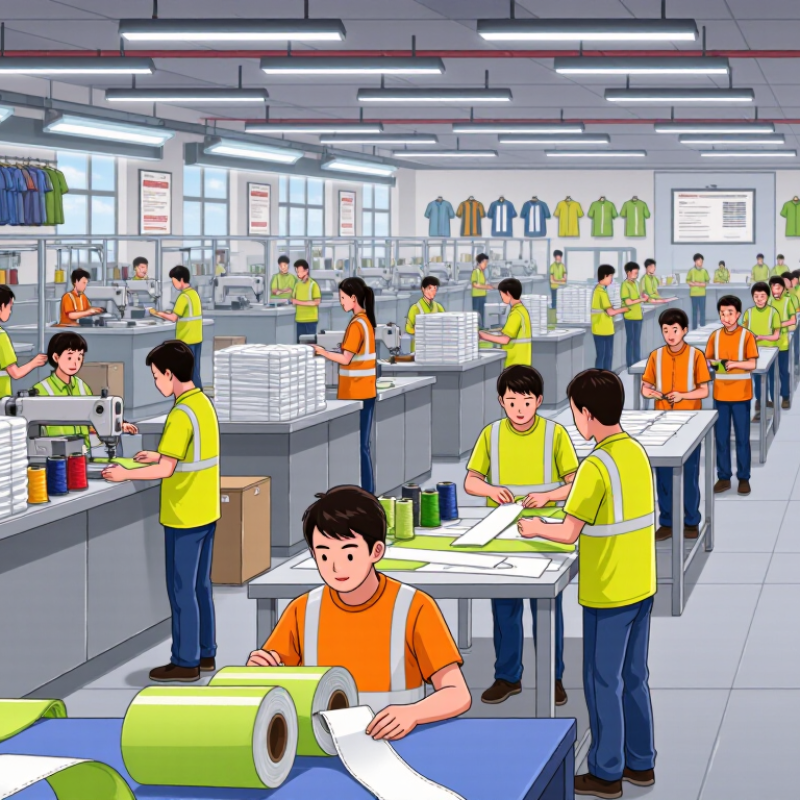
China’s high-visibility shirt industry is concentrated in several manufacturing regions. Jiangsu and Zhejiang support mature textile supply chains, with reliable access to polyester fabrics, dyeing facilities, and sewing workshops. Guangdong is strong in fast sampling, export coordination, and flexible customization. Shandong also serves workwear buyers, especially those requiring sturdy fabrics and larger production runs.
Regional strengths affect purchasing decisions. A Zhejiang factory may offer finely controlled fabric colors and consistent stitching. A Guangdong supplier may develop a revised sample within days. In Shandong, production lines often handle heavier shirts, reinforced pockets, and seasonal volume orders. Many factories can add reflective tape, mesh panels, breathable backs, embroidery, or heat-transfer markings. Buyers should request fabric weight, colorfastness records, reflective performance data, and pre-shipment inspection photos. Small details matter.
Supplier capability is not proven by a polished showroom. It is tested through sampling, measurement checks, and production records. Ask how fabric rolls are inspected before cutting. Confirm whether the same reflective materials will be used in bulk. A clear answer builds trust. A vague answer deserves caution. No region is perfect. Reality varies. Some smaller workshops offer competitive prices but lack stable quality control. Large factories may provide stronger systems, yet require higher minimum orders. That trade-off is easy to overlook. Practical buyers compare location, process control, communication, and documented quality evidence before choosing a long-term partner.
How Global Buyers Evaluate China Hi-Vis Shirt Manufacturers
China Top Hi Vis Shirts Manufacturers for Global Buyers
How Global Buyers Evaluate China Hi-Vis Shirt Manufacturers
Global buyers usually examine more than catalog photos and factory prices. They review fabric composition, reflective tape placement, stitching density, and size consistency. A reliable manufacturer should explain each material choice clearly. Sample shirts must survive washing, outdoor work, and repeated movement without losing visibility.
Factory experience matters. Buyers often request production records, quality inspection procedures, and current laboratory test reports. They may also inspect cutting rooms, sewing lines, and packing areas through an audit or video call. Clear communication is essential when discussing color codes, logo placement, carton labels, and delivery schedules. Small errors can delay an entire shipment.
Not every low quote is a bargain. An unusually cheap offer may hide weaker fabric or limited inspection. Buyers should compare complete specifications, not isolated prices. I find supplier evaluation imperfect because documents cannot reveal every production habit. A pre-production sample helps, but even that is only one checkpoint. Ask how defects are recorded, corrected, and prevented. Manufacturers that accept difficult questions often appear more dependable over time. Still, buyers should keep written agreements and verify each order independently.
Custom Production, Quality Control, Certifications, and Export Services
China’s top hi vis shirt manufacturers support global buyers with custom production, controlled sampling, and export coordination. Buyers can specify fabric weight, fluorescent color, reflective tape width, pocket layout, sleeve length, and logo placement. A practical sample should be checked under daylight and warehouse lighting. Small details matter. Stitch density, collar shape, and tape alignment can affect both comfort and visibility.
Experienced factories usually combine incoming material checks with in-line and final inspections. Quality teams may test colorfastness, shrinkage, seam strength, reflective performance, and size measurements. Buyers should request inspection records, test reports, and certification documents relevant to the destination market. Certifications are not decoration; their scope and validity must be verified. Export services may include carton labeling, packing lists, customs documents, booking support, and pre-shipment inspection. However, no factory gets every sample perfect. A rushed approval can still create costly corrections.
Tips: Ask for a measured size chart, fabric composition, and wash-test result before production. Confirm whether reflective materials have traceable documentation. Use a written inspection checklist with acceptable tolerances. Keep one approved sample for comparison. Also, review packaging carefully; damp cartons or unclear labels can delay delivery. Reliable communication helps, but written evidence is stronger.