10 Essential Tips for Choosing the Right Safety Vest for Maximum Protection
In today's demanding work environments, the importance of selecting the right safety vest cannot be overstated. According to a recent report by the National Institute for Occupational Safety and Health (NIOSH), high-visibility apparel, particularly safety vests, play a crucial role in accident prevention, reducing the risk of injuries by up to 50% in high-traffic work zones. With the increasing number of construction sites and roadwork activities, safety vests have become an indispensable part of personal protective equipment (PPE).
Renowned safety expert Dr. James Thompson emphasizes the necessity of choosing a suitable safety vest by stating, "The right safety vest not only enhances visibility but also elevates the overall safety culture within a workplace." By understanding the various features and standards that safety vests must adhere to, workers and employers alike can make informed choices that prioritize safety without compromising comfort or functionality. This guide outlines ten essential tips for selecting the perfect safety vest, ensuring maximum protection and compliance with industry regulations. As we delve deeper into these tips, it's vital to recognize that investing time and resources in the right safety gear is a commitment to safeguarding human lives on the job.

Understanding Different Types of Safety Vests and Their Uses
When selecting the right safety vest, understanding the different types available is crucial for ensuring maximum protection in various work environments. Safety vests come in several styles, each designed for specific applications. For instance, Class 1 vests are suitable for low-risk areas, typically used in parking lots or on private property, providing basic visibility with reflective strips. In contrast, Class 2 vests are ideal for construction zones or environments with moderate traffic, incorporating more reflective material for enhanced visibility in both daylight and low-light conditions. According to the Occupational Safety and Health Administration (OSHA), adequate visibility can significantly reduce the risk of accidents in high-traffic areas, with studies indicating that proper use of high-visibility apparel decreases workplace injuries by an estimated 30%.
Another important type is the Class 3 safety vest, designed for high-visibility demands in critical workspaces such as roadside construction or emergency response scenarios. These vests offer the highest level of visibility, featuring bright colors and larger reflective areas, ensuring that workers remain seen from all angles. The National Institute for Occupational Safety and Health (NIOSH) reports that wearing Class 3 vests can be instrumental in protecting workers who are often in close proximity to moving vehicles, as these vests enhance their visibility to drivers even in poor weather conditions. Additionally, quality considerations such as fabric performance, fit, and comfort should not be overlooked, as they can influence the likelihood of consistent wear and adherence to safety protocols in the field.
Identifying the Correct Size and Fit for Maximum Comfort and Safety
When selecting a safety vest, the correct size and fit are paramount for ensuring both comfort and safety. A vest that is too tight can restrict movement, causing discomfort and potentially leading to accidents, especially in environments that require dynamic physical activity. Conversely, a vest that is overly loose can create hazards by easily snagging on equipment or causing visibility issues. To achieve the best fit, it's crucial to measure your torso accurately, focusing on chest and waist sizes, and compare them with the sizing chart provided by the manufacturer.
Additionally, consider the type of clothing you will be wearing underneath the vest. Layering can affect how the vest fits, so you should account for this when choosing your size. Opting for adjustable features, such as side straps or closures, can provide a more personalized fit and enhance mobility. Remember, safety does not only rely on the vest's visibility or reflective properties; comfort and fit play a critical role in ensuring you remain alert and responsive while working in potentially hazardous situations. Therefore, always prioritize a vest that allows for freedom of movement without compromising on safety standards.
Evaluating Reflective Materials for Enhanced Visibility in Various Environments
When selecting the right safety vest, the reflective materials used are crucial for ensuring optimal visibility in various environments. Unlike standard fabrics, high-performance reflective materials are engineered to reflect light back to its source, enhancing visibility in low-light conditions. This is particularly important for workers in construction, road maintenance, or emergency response roles, where being seen can greatly reduce the risk of accidents. The effectiveness of reflective materials is influenced by factors such as the type of light source, distance, and angle from which light hits the vest.
Different environments call for specific types of reflective materials. For example, reflective materials that perform well in urban settings may differ from those ideal for rural or industrial areas. In urban areas, where street lighting can create glare, vests with wider reflective strips may offer better visibility against the backdrop of cars and illuminated signs. Conversely, in outdoor environments with varied lighting conditions, vests designed with fluorescent colors in addition to reflective strips can enhance visibility during daylight hours. It's essential to consider both the reflective capability and the surrounding environment to choose a safety vest that provides maximum protection against potential hazards.
10 Essential Tips for Choosing the Right Safety Vest for Maximum Protection - Evaluating Reflective Materials for Enhanced Visibility in Various Environments
| Tip Number |
Tip Description |
Recommended Reflective Material |
Best Environment |
| 1 |
Choose bright colors for high visibility during the day. |
Neon yellow or orange |
Daytime outdoor work |
| 2 |
Select vests with reflective strips. |
Retroreflective tape |
Low light and nighttime environments |
| 3 |
Consider breathability for comfort. |
Mesh fabric |
Hot weather conditions |
| 4 |
Ensure the vest has adjustable features. |
Velcro straps |
Various body sizes |
| 5 |
Check for storage pockets for tools and essentials. |
Durable nylon |
Construction sites |
| 6 |
Look for certifications for safety standards. |
ANSI/ISEA 107 compliance |
Industrial environments |
| 7 |
Evaluate the weight of the vest for ease of wear. |
Lightweight polyester |
Long work shifts |
| 8 |
Consider chemical resistance if applicable. |
Specialized coated fabric |
Chemical handling areas |
| 9 |
Think about additional features like hood or sleeves. |
Removable hood |
Weather-prone environments |
| 10 |
Choose a vest with an appropriate fit to avoid restrictions. |
Standard fit design |
General use |
Considering the Weather Resistance and Breathability of Safety Vests
When selecting the right safety vest, two critical factors to consider are weather resistance and breathability.
Weather-resistant vests are designed to provide protection against various environmental conditions,
including rain, wind, and extreme temperatures. Look for vests that incorporate materials with waterproof or water-repellent properties,
as these will help keep you dry during inclement weather. Additionally, features like windproof fabrics and thermal insulation
can enhance warmth without sacrificing mobility, ensuring that the wearer remains comfortable and protected.
On the other hand, breathability is equally essential, especially for those who work in active roles or
under physically demanding conditions. A safety vest with good breathability will allow moisture and heat to escape, reducing the risk of overheating.
Vests made from materials that promote ventilation, such as mesh panels or lightweight fabrics, can significantly improve comfort
during long hours of wear. This balance between weather resistance and breathability is crucial for ensuring that individuals can maintain
their focus and effectiveness while remaining safe in varying conditions. When choosing a vest, prioritize these characteristics to ensure
maximum protection and comfort in any work environment.
Assessing Additional Features for Specialized Needs in Safety Vests
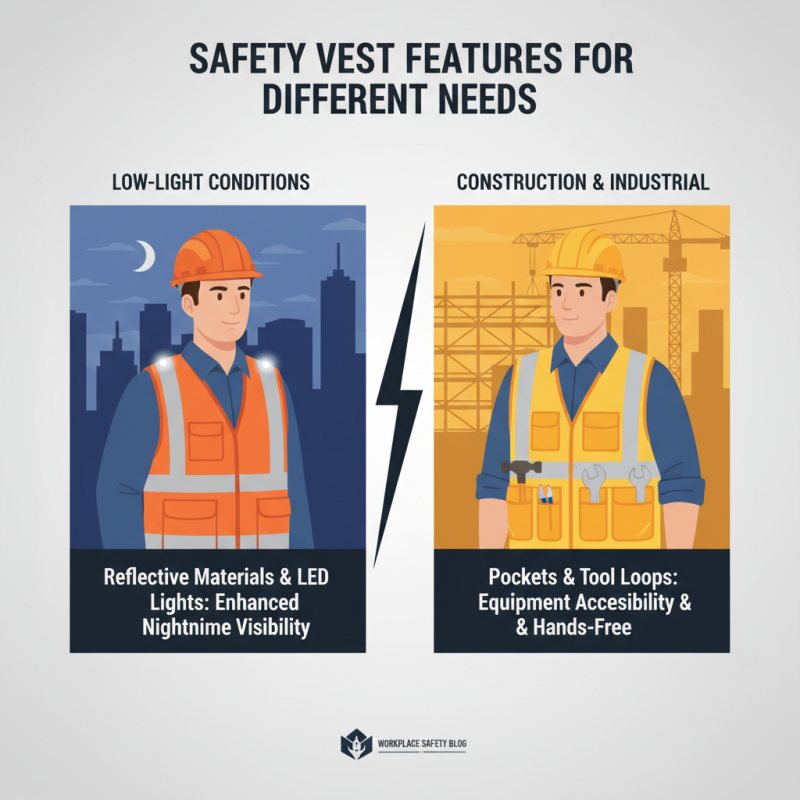
When selecting a safety vest, it's crucial to consider specialized features that cater to specific needs within various work environments. For instance, individuals working in low-light conditions might benefit from vests that incorporate reflective materials or LED lights, enhancing visibility and ensuring safety during nighttime operations. Additionally, for those in construction or industrial settings, safety vests with built-in pockets and tool loops can provide convenience, allowing workers to keep essential equipment easily accessible while maintaining a hands-free experience.
Moreover, the choice of fabric and safety vest design can significantly impact comfort and functionality. Breathable, moisture-wicking materials are ideal for outdoor work in hot climates, providing comfort over long periods. Conversely, insulated vests may be preferable for individuals exposed to colder conditions. Furthermore, adjustable features such as side straps can allow for a customized fit, accommodating a range of body types while ensuring that the vest remains snug and secure during movement. By assessing these additional features, workers can select safety vests that not only meet regulatory standards but also enhance their overall efficiency and protection on the job.