Leave Your Message
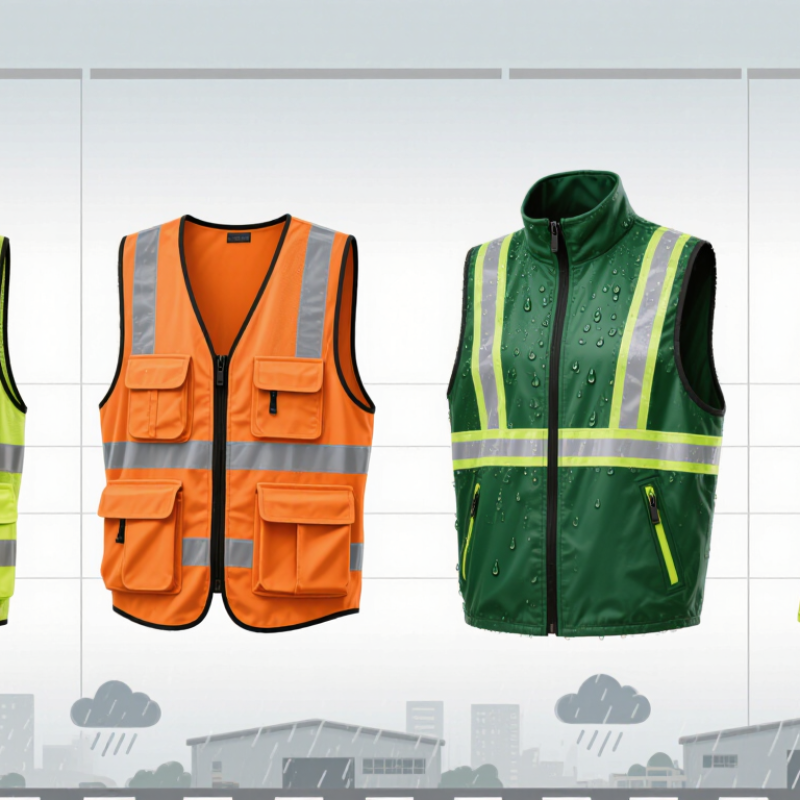
A Reflective Vest may look like a simple layer, but its design can affect comfort, visibility, and freedom of movement. In 2026, buyers can choose from lightweight mesh styles, durable work vests, weather-resistant designs, and options made for running or cycling. Each type serves a different setting. A vest that feels cool on a warm warehouse floor may offer little protection from wind or rain outdoors.
Small details matter. Reflective strips should be easy to see from different angles, while closures need to stay secure during normal movement. Fit matters too: a vest that rides up, catches on equipment, or covers other clothing poorly can become distracting. No vest solves every visibility problem.
This guide compares common vest types by their materials, features, and intended uses. It also considers practical trade-offs, such as breathability versus weather coverage and extra pockets versus a lighter feel. Product labels and performance claims can vary, so check the manufacturer’s specifications and any requirements set by your workplace or activity organizer. I would not assume that a brighter color or wider strip alone makes one vest best for every user. The right choice depends on where it will be worn, how long it must stay comfortable, and what other protective gear is needed. A close look at those factors can make the options easier to compare—and expose where a product may not quite fit the job.
In 2026, the useful distinction is where people work, not simply vest color. ANSI/ISEA 107-2020 classifies high-visibility apparel as Type O, Type R, or Type P. Type O is for off-road work with lower traffic exposure, such as operating equipment on a closed site. Type R is designed for roadway settings, where moving vehicles create greater risk. Type P serves public-safety workers, including responders working around traffic or incident scenes. That distinction is easy to miss.
The Federal Highway Administration reported 891 deaths in U.S. work-zone crashes in 2022. That figure does not show that a particular vest would have prevented any death. It does show why visibility deserves careful attention. For roadway crews, Type R garments come in Performance Classes 2 and 3; the appropriate class depends on the task, surroundings, and visibility conditions. Type P also offers Class 2 and Class 3 options for public-safety duties. Check the garment label and standard markings rather than judging by bright fabric alone.
Look at the actual scene. A worker beside a dark road may need more visible background material and reflective bands than someone inside a controlled site. Fit matters. So does placement: a tool belt or open jacket can hide reflective stripes. Type O is not a lesser vest; it fits a different exposure. Still, selecting by job title alone can be a mistake. Conditions change, and a vest cannot replace traffic controls or a site-specific hazard assessment.
Compare the standard’s garment types by work environment and intended use. Select apparel based on the task’s hazards and verify the garment label for its type and performance class.
| ANSI/ISEA 107 Type | Intended Environment | Common Work Settings | Applicable Classes | Key Selection Notes |
|---|---|---|---|---|
| Type O Off-road |
Work areas away from public roadway traffic, where vehicles or mobile equipment create visibility hazards. | Warehousing, distribution yards, construction sites away from roadway exposure, and industrial facilities. | Class 1 or Class 2 | Choose the class appropriate to the site’s risk assessment. Type O is intended for off-road use, not as a substitute for roadway apparel where Type R is required. |
| Type R Roadway |
Work on or near public-access roadways and other traffic-exposed environments. | Road construction, utility work, traffic control, and roadway maintenance. | Class 2 or Class 3 | Class 2 and Class 3 are roadway-apparel classes. The appropriate choice depends on factors such as traffic speed, distance from traffic, visibility conditions, and the task’s risk assessment. |
| Type P Public safety |
Public safety activities where conspicuity apparel is needed, including work in roadway environments. | Emergency response, incident scenes, and other public safety operations. | Class 2 or Class 3 | Type P is designed for public safety use. Check that the garment’s labeled type and class suit the assignment and any applicable workplace or agency requirements. |
Note: Fluorescent background material helps improve daytime conspicuity; retroreflective material returns light toward its source and helps improve visibility in low-light conditions. ANSI/ISEA 107 is a garment-performance standard; always check the label and follow the applicable hazard assessment and safety requirements.
It needs at least 775 square inches of fluorescent background material and 201 square inches of reflective material. Check the label.
It has larger minimum coverage: 1,240 square inches of background material and 310 square inches of reflective material. More coverage helps, but it is not a guarantee.
They can return light toward its source, such as vehicle headlights. Their placement matters, especially across the torso and shoulders.
Yes. A bulky jacket, tool belt, or folded hem can hide its material. It happens easily.
Try it over the layers you actually wear at work. Make sure it allows movement and stays visible when fastened.
Look at the front and back for continuous reflective bands. Check for dirt, fading, peeling, or damage. I might miss a small tear, so take a second look.
Replace it if the fabric is badly faded or reflective bands are peeling away. Follow its care instructions, too.
No. Lighting, traffic separation, and movement also affect visibility. A vest is only one part of a safety plan.