2026 Best Reflective Vest for Bulk Buyers?
A bulk order can look simple on a spreadsheet: one color, one logo, one delivery date. On a worksite, the details are harder to ignore. A vest may ride up over a jacket, snag on a tool belt, or lose visibility under dust and grime. For 2026 buyers, choosing a Reflective Vest means weighing visibility, fit, durability, and comfort together—not just comparing unit prices.
Former OSHA administrator Dr. David Michaels has emphasized prevention in workplace safety. A practical paraphrase of that principle is: “Choose protective gear that workers can use consistently.” This is a paraphrase, not a verbatim quotation. It matters because a vest left in a locker protects nobody. Check reflective coverage in daylight and under headlights, inspect stitching around pockets, and test sizing over the layers workers actually wear. Small choices matter.
This guide helps bulk buyers compare fabric weight, reflective trim, closures, size ranges, customization, and sample policies. It also considers supplier communication and repeat-order consistency, since a second shipment should match the first. Ask for product specifications and inspect a sample before approving a large run. A low quote can hide thin fabric or limited sizing. A premium vest can still miss the mark if its cut restricts movement. The best choice depends on the work, the wearer, and the conditions. Details matter. Procurement is not perfect; sizing estimates can miss, and samples cannot reproduce every shift. Build in feedback from the people wearing the vests. That is a better starting point for a reliable 2026 purchase.
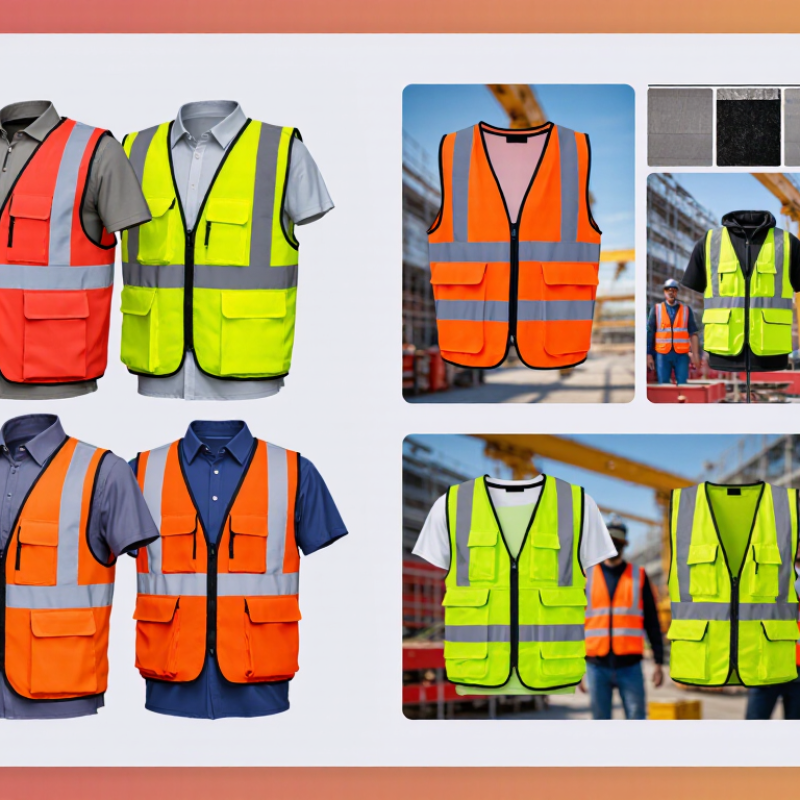
Reflective Vest Fundamentals: ANSI/ISEA 107-2020 Types and Classes
2026 Best Reflective Vest for Bulk Buyers?
ANSI/ISEA 107-2020 gives buyers a practical way to compare high-visibility apparel. It separates garments by work setting and by the amount and arrangement of visible materials. Type O is intended for off-road work, Type R for roadway work, and Type P for public safety activities. The type matters. A vest suitable for a warehouse yard may not provide the visibility needed near moving traffic.
Classes describe performance requirements, including minimum areas of fluorescent background material and retroreflective material. Type O garments are Class 1. Type R and Type P garments are Class 2 or Class 3, with Class 3 requiring more coverage. Check the garment’s label and product documentation rather than judging by color or reflective strips alone. Small details count.
For bulk orders, match the type and class to the actual tasks, lighting, and traffic exposure. Then review size ranges, closure design, pocket placement, and care instructions with workers who will wear the vests. A vest that fits poorly may be left unzipped or unused; that is an easy detail to overlook. Ask suppliers for documentation showing the applicable standard and garment classification, and verify that the delivered items match the approved sample. One honest caveat: no vest replaces site-specific hazard assessment or safe work practices.
Class 2 vs. Class 3: 775/201 vs. 1,240/310 in² Material Minimums
For bulk buyers, the difference is measurable, not cosmetic. ANSI/ISEA 107 sets minimums of 775 square inches of background material and 201 square inches of retroreflective material for Class 2 apparel. Class 3 requires 1,240 and 310 square inches, respectively. Source: ANSI/ISEA 107, the American National Standard for High-Visibility Safety Apparel and Accessories. That means Class 3 calls for 465 more square inches of background material and 109 more square inches of reflective material per garment. Small difference? Not really.
Those minimums help buyers compare specifications, but the cut and placement matter too. Ask for compliance documentation for the exact garment style and size range being ordered. A sample in one size may not reveal how reflective bands sit on a larger or smaller vest. Check that bands remain visible around the torso and shoulders when workers bend, reach, or wear equipment over the vest. A neat product sheet is useful; it is not the same as checking the garment.
For mixed-duty crews, choosing one class for every worker can simplify purchasing, but may add cost or bulk where it is not needed. I would not decide from square inches alone. Confirm the work environment, layering needs, and required class with the responsible safety professional. Even careful buyers can miss fit issues when ordering from a size chart.
2026 Best Reflective Vest for Bulk Buyers? — Class 2 vs. Class 3: 775/201 vs. 1,240/310 in² Material Minimums
| Comparison |
Class 2 Vest |
Class 3 Garment |
| Minimum background material |
775 in² (about 5,000 cm²) |
1,240 in² (about 8,000 cm²) |
| Minimum retroreflective material |
201 in² (about 1,297 cm²) |
310 in² (about 2,000 cm²) |
| What the figures represent |
Minimum material areas specified for the garment’s high-visibility classification. |
Higher minimum material areas than Class 2, supporting greater conspicuity. |
| Typical purchasing consideration |
Consider when the worksite risk assessment calls for Class 2 visibility and a vest meets the required garment configuration. |
Consider when the worksite risk assessment calls for the higher visibility level and the selected garment meets the required configuration. |
| Bulk-order checks |
Confirm the required class, garment style, sizes, color, and applicable standard with the project or safety team. Request product documentation and check garment labels before ordering. |
| Important qualification |
Material-area minimums alone do not establish garment compliance. The garment must also meet applicable design, material-performance, labeling, and other standard requirements. |
Note: Square-centimeter figures are approximate conversions. Confirm the governing ANSI/ISEA 107 edition and project-specific requirements before placing a bulk order.
Material and Design Checks: Background Fabric, Tape, and 360° Visibility
For bulk orders, inspect the vest as a visibility system, not just a bright shell. ANSI/ISEA 107-2020 sets minimum material areas by garment class. Class 2 requires 775 square inches of background material and 201 square inches of retroreflective material. Class 3 requires 1,240 and 310 square inches, respectively. Check the applicable class against the worksite risk assessment and purchasing specification. Numbers matter.
Choose fluorescent background fabric that remains vivid in daylight and holds up to repeated washing. Ask for lot-specific test reports covering colorfastness, seam strength, and reflective performance after care cycles. ANSI/ISEA 107-2020 includes material performance requirements, but a showroom sample alone cannot confirm production consistency. Request documentation for the exact fabric-and-tape combination. Small detail. Big difference.
For 360° visibility, inspect the garment from every side under low-light conditions. Tape should remain visible across the front, back, and shoulders, without being hidden by pockets or pack straps. A neat front can still leave a blind side. The U.S. Bureau of Labor Statistics reported 5,283 fatal work injuries in 2023, with transportation incidents the leading event category. That figure is not vest-specific, but it reinforces why visibility deserves careful evaluation. Check fit on different body sizes, too; a vest that twists or bunches can interrupt its reflective pattern.
Bulk Sourcing Checklist: Sizing, Testing, Lot Traceability, and Reordering
For a 2026 reflective-vest order, start with the people who will wear it. Ask whether it goes over a T-shirt, a winter coat, or a tool belt. These layers change the fit. Request a size run, then try samples while reaching, bending, and fastening the closures. Fit varies. Record measurements and agreed tolerances, not just S, M, and L. A size chart alone can look precise and still leave crews with tight shoulders.
Set written acceptance criteria before production. Check stitching, fasteners, fabric, and reflective areas under consistent lighting. If the vest is meant to be washed, test samples after the intended wash cycles too. Use a qualified lab or documented in-house method, and keep results tied to the exact sample and specification. Keep records. A quick visual check catches obvious flaws, but it cannot confirm every performance claim.
For lot traceability, require each shipment to identify its production lot and date. Link that code to material details, inspection records, and any test results. Keep a retained sample when practical. A neat spreadsheet is not proof if entries are incomplete; verify the paperwork against cartons during receiving. Before reordering, compare the new sample with the approved one, including measurements and reflective layout. Small changes can slip through. Reorder against a controlled specification, and record any approved revision before placing the next bulk quantity.
2026 Compliance Review: Match Vest Classes to Workplace Risk and Use Cases
A vest class should follow the hazard, not the purchase price. The U.S. Bureau of Labor Statistics reported 1,942 fatal work injuries involving transportation incidents in 2023. That figure is a useful warning for crews near moving vehicles, though it cannot predict risk at a specific site. Under ANSI/ISEA 107, Class 1 garments suit lower-risk settings with traffic separated from workers. Class 2 adds visibility for busier work zones and reduced-light conditions. Class 3 provides the greatest conspicuity, often with sleeves that help drivers recognize movement. Visibility is not decoration.
For a bulk order, map tasks before choosing one class for everyone. A yard worker crossing a forklift lane may need different protection from a road crew exposed to fast traffic. Review vehicle speed, distance, lighting, weather, and how long workers remain exposed. Then check that vest fit allows free movement over each uniform layer. Small details matter. Reflective bands hidden by tool belts, dirt, or open jackets can weaken visibility in practice. ANSI/ISEA 107-2020 sets garment performance requirements, but local rules and site policies may add requirements; verify the current edition before purchase. Ask suppliers for documentation, wash-care guidance, and replacement criteria. One honest limitation: a compliant vest cannot make an unsafe traffic plan safe.
2026 Best Reflective Vest for Bulk Buyers? Compliance Review: Match Vest Classes to Workplace Risk and Use Cases
ANSI/ISEA 107-2020 specifies minimum areas of compliant background and retroreflective or combined-performance material for each garment class. The chart compares those minimums; material area alone does not establish that a garment is suitable for a particular job.
Use-case guide: Class 1 may suit lower-risk work where traffic and other hazards are well separated. Class 2 is commonly considered for greater exposure or more complex visibility conditions. Class 3 is intended for higher-risk situations requiring enhanced conspicuity, including visibility of the wearer’s body through a wider range of movement. These are general selection considerations, not a substitute for a site-specific hazard assessment.
For bulk purchasing, confirm the required standard and garment class with the safety team, check each garment’s labeling and fit, and verify applicable local regulations and site rules.