Leave Your Message

China Top 10 Hi Vest Jacket Manufacturers for Global Buyers

Global demand for compliant workwear is rising as construction, logistics, road maintenance, and utilities expand. Grand View Research identifies workplace safety apparel as a growing industrial clothing segment, driven by stricter visibility requirements and employer risk controls. The report also highlights durable fabrics, reflective materials, and product compliance as important purchasing factors. Visibility matters.

This guide examines China’s top 10 Hi Vest Jacket manufacturers for global buyers. It focuses on practical evidence, including factory experience, material options, production capacity, quality systems, testing documents, and export performance. Buyers should check whether each supplier can provide EN ISO 20471 test reports for European markets or ANSI/ISEA 107 compliance for the United States. These standards address color performance, reflective bands, garment design, and visibility classes. A bright orange vest with two-inch silver tape may look acceptable, yet laboratory results can reveal poor reflectivity after washing.

According to MarketsandMarkets, the global workwear market continues to grow through industrial expansion, safety awareness, and replacement demand. However, published market figures differ between research firms. That limitation deserves attention. No ranking is flawless. Factory size alone does not prove reliability. An experienced sourcing review should compare sample consistency, stitching around armholes, tape adhesion, fabric weight, inspection records, and communication speed. This introduction uses those practical benchmarks to frame the manufacturers discussed in the full list. It also encourages buyers to verify current certifications directly, because documents and production capabilities can change. Good judgment remains essential.
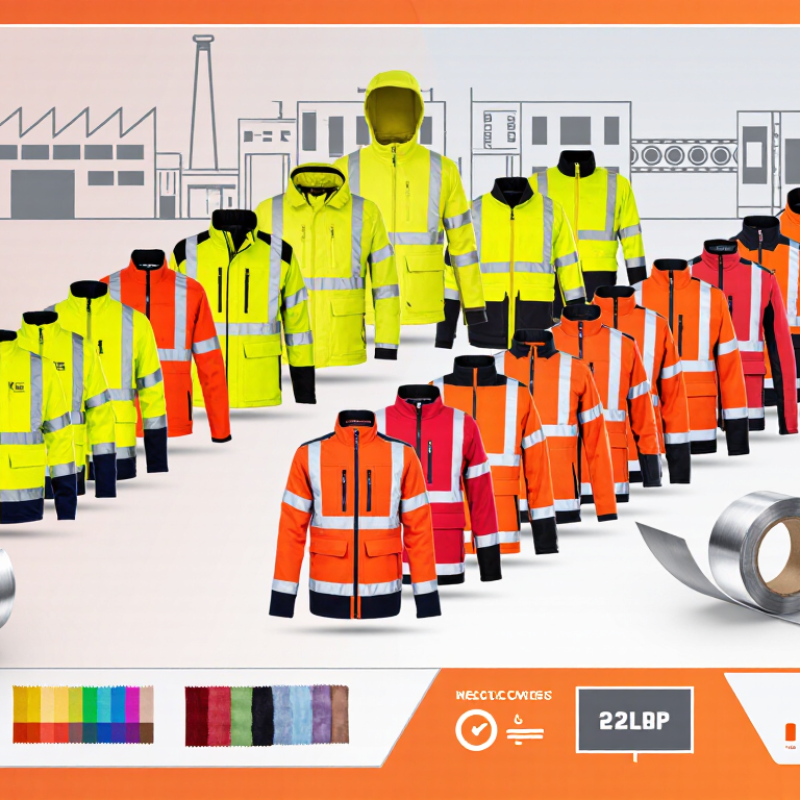
China Top 10 Hi Vest Jacket Manufacturers for Global Buyers

What Defines a Reliable Hi-Vis Vest Jacket Manufacturer?

A reliable hi-vis vest jacket manufacturer proves performance before discussing price. Global buyers should request fabric composition, colorfastness records, and recent third-party test reports. Good visibility starts with fluorescent fabric and properly positioned reflective tape. It also depends on contrast, stitching, and durability after washing. Ask for a physical sample. Inspect the tape under weak warehouse lighting. Small gaps can become obvious there. The manufacturer should explain which visibility standard the garment follows and where testing occurred. Records should show test dates, sample details, and laboratory information. Vague certificates deserve further questions.

Production experience appears in the details workers often notice first. Seams should remain flat during movement, while pocket corners need reinforcement. Zippers should run smoothly with gloves. A dependable Chinese factory checks measurements during cutting, sewing, and final packing. It should also control fabric lots, because color differences can appear across one order. Ask how rejected pieces are recorded and corrected. A clear answer is more valuable than polished sales language. My own review habit is not perfect; I once focused on reflective brightness and missed a weak shoulder seam. That mistake changed my inspection checklist.

Reliable suppliers communicate limits honestly. They state lead times, minimum quantities, customization boundaries, and replacement procedures in writing. They should provide a pre-production sample before bulk manufacturing. Inspection photos alone are insufficient. Buyers need traceable batch records and consistent carton labeling. Ethical labor practices and safe facilities also matter to long-term supply reliability. Price remains important, but an unusually low quote may hide thinner fabric or rushed inspection. A manufacturer willing to discuss weaknesses is often easier to trust. Still, every claim needs independent verification.

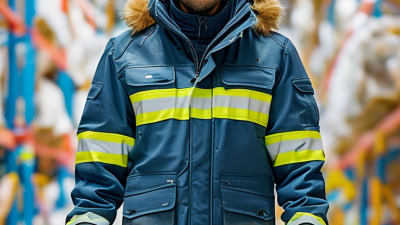
How China’s Hi-Vis Vest Industry Serves Global Buyers

China Top 10 Hi Vest Jacket Manufacturers for Global Buyers

China’s hi-vis vest industry serves buyers through flexible production, fast sampling, and export experience. Manufacturers commonly supply mesh vests, rainwear, bomber jackets, and winter work jackets. Many factories support custom colors, reflective tape layouts, size grading, and private labels.

The International Labour Organization reported about 2.93 million work-related deaths globally in 2023. This figure reinforces the need for visible, durable workwear. Grand View Research’s high-visibility clothing market report projects steady growth of around 6% annually through 2030.

Buyers should not treat this as a simple garment purchase. Fabric weight, tape performance, stitching quality, and wash durability affect real-site protection. ISO 20471 and ANSI/ISEA 107 provide useful performance frameworks, but certification requirements differ by destination.

Tips: Request recent test reports, wash-test results, and production samples before placing bulk orders. Check reflective brightness after repeated washing. Ask about laboratory accreditation, not only factory claims. Some suppliers communicate well but document poorly. That weakness deserves attention. A detailed tech pack can reduce color errors, wrong tape placement, and delayed approvals. Also confirm carton dimensions and delivery terms early. These details can quietly change the landed cost.

Top 10 Chinese Hi-Vis Vest Jacket Manufacturers

Chinese Hi-Vis Vest Jacket Manufacturers: A Practical Guide for Global Buyers

China’s hi-vis vest jacket sector supports construction, logistics, road maintenance, and utilities worldwide. Fortune Business Insights valued the global workwear market at about USD 17.5 billion in 2023, showing strong demand for protective garments. However, buyers should not judge manufacturers by price alone. Fabric weight, reflective tape performance, stitching quality, and production consistency matter more during daily use.

Reliable Chinese manufacturers should provide traceable test reports and clear material specifications. Check compliance with EN ISO 20471 or ANSI/ISEA 107, depending on the destination market. Ask for fluorescent fabric composition, reflective tape class, wash-cycle results, and sample inspection records. SGS and Intertek reports can support verification, but buyers should confirm the report number independently. In practical sourcing, zipper alignment and pocket reinforcement often reveal more than attractive product photos. Some supplier pages still show outdated standards. That deserves attention.

Tips: Request a pre-production sample. Test visibility in daylight and vehicle headlights. Confirm sizes after washing. Review factory audit records, worker-safety procedures, and batch inspection methods. A small order can expose weaknesses early. Even experienced buyers sometimes overlook hood adjustment or heat buildup. That mistake is easy to make.

China Top 10 Hi-Vis Vest Jacket Manufacturers for Global Buyers - Top 10 Chinese Hi-Vis Vest Jacket Manufacturers
Rank Anonymous Manufacturer Profile Primary Product Focus Common Shell Fabrics Reflective Material Options Typical Compliance Requirements Customization Capability Typical MOQ Range Typical Production Lead Time Best Fit for Global Buyers
1 Profile 01 High-visibility mesh safety vests 100% polyester mesh; breathable warp-knit or tricot mesh Silver reflective tape in 2-inch or 50 mm widths; segmented tape available EN ISO 20471 or ANSI/ISEA 107, depending on the destination market Logo printing, color matching, pocket placement, zipper or hook-and-loop closure 500–1,000 pieces per color or design 25–40 days after approval of samples and artwork Construction, traffic control, warehouse, and event staffing programs
2 Profile 02 Two-tone hi-vis workwear vests and jackets Polyester-cotton blends; polyester oxford fabric for reinforced panels Contrast reflective tape, segmented tape, and reflective piping EN ISO 20471; fabric and trim testing normally required for certified garments Contrast panel design, detachable sleeves, pockets, embroidery, and heat transfer 300–800 pieces per style 30–45 days for repeat production Industrial maintenance and utility workwear suppliers
3 Profile 03 Lightweight packable safety vests Lightweight polyester fabric, mesh inserts, and water-repellent woven fabric Lightweight reflective tape or segmented reflective film Destination-specific visibility requirements; independent laboratory testing recommended Foldable construction, storage pouch, private labels, and custom packaging 1,000–3,000 pieces per design 20–35 days after pre-production approval Promotional campaigns, transport operators, and short-term worksite use
4 Profile 04 Hi-vis bomber jackets and cold-weather outerwear Polyester oxford shell with quilted or fleece lining High-visibility reflective tape, reflective bands, and reflective shoulder details EN ISO 20471 with additional cold-weather or water-resistance testing when specified Insulation weight, hood design, cuff construction, pocket layout, and fabric color 300–600 pieces per style 40–60 days due to layered construction and seasonal materials Winter construction, road maintenance, and outdoor logistics programs
5 Profile 05 Flame-resistant and arc-rated visibility garments Inherent or treated flame-resistant cotton blends and aramid-blend fabrics Flame-resistant reflective tape selected for the required hazard class Applicable flame, heat, arc, and visibility standards must be confirmed for the end use Specialized pattern engineering, certified trims, labeling, and technical documentation 500–1,500 pieces per approved fabric and style 45–75 days, including material and testing coordination Oil and gas, electrical maintenance, welding, and heavy industrial sectors
6 Profile 06 High-visibility rain jackets and waterproof shells PU-coated polyester, laminated polyester, or seam-sealed waterproof fabric Water-resistant reflective tape and reflective heat-transfer details EN ISO 20471 plus rainwear performance testing when requested Waterproof zippers, storm flaps, hood systems, ventilation, and custom fit 500–1,000 pieces per color and style 35–55 days after material confirmation Outdoor logistics, municipal services, and wet-weather infrastructure work
7 Profile 07 Surveying, roadwork, and traffic-management vests Breathable polyester mesh with oxford reinforcement at pockets and shoulders Wide reflective bands, vertical shoulder strips, and cross-back configurations ANSI/ISEA 107 or EN ISO 20471 according to the purchasing specification High pocket count, radio loops, ID windows, custom back printing, and color blocking 300–1,000 pieces per configuration 25–45 days for standard constructions Road contractors, survey teams, and public infrastructure projects
8 Profile 08 Recycled-material hi-vis safety apparel Recycled polyester mesh or woven fabric, subject to traceability documentation Reflective tape compatible with recycled-fiber garment construction Visibility standard plus recycled-content documentation when required by the buyer Recycled-content declarations, custom labels, packaging reduction, and design development 1,000–3,000 pieces per style 35–55 days, depending on certified material availability Public tenders and corporate procurement programs with sustainability targets
9 Profile 09 Premium technical hi-vis jackets and softshells Stretch polyester softshell, laminated fleece, or breathable technical fabric Segmented reflective tape, heat-applied reflective graphics, and low-profile trims Visibility testing plus abrasion, colorfastness, and weather-performance testing as specified Ergonomic patterning, bonded seams, ventilation panels, and technical pocket systems 300–800 pieces per style 45–65 days for engineered constructions Premium workwear distributors and technical field-service teams
10 Profile 10 Export-focused OEM and private-label safety apparel Polyester mesh, oxford, twill, cotton blends, and buyer-specified fabrics Standard, segmented, and custom-positioned reflective tape options Buyer-specified regional standards, third-party inspection, and pre-shipment testing Full OEM development, grading, sample revisions, packaging, labeling, and documentation 200–1,000 pieces for standard products; higher for custom programs 30–60 days after final approval Importers requiring consolidated orders across multiple safety-apparel categories
The profiles above are anonymized manufacturing categories rather than named companies. MOQ, lead time, fabric selection, and compliance requirements vary by design, order volume, testing scope, and destination market. Buyers should verify current certifications, factory capacity, sample quality, and inspection results before placing an order.

How to Compare Certifications, Quality, and Production Capacity

When comparing China’s top 10 hi-vis jacket manufacturers, certification should be verified, not simply displayed on a website. Check whether products meet ISO 20471 or ANSI/ISEA 107 requirements for visibility, background material, and reflective performance. Ask for current test reports, issuing laboratories, and matching product codes. A factory certificate alone does not prove every jacket passes testing. The ISO Survey 2022 recorded 1,265,216 ISO 9001 certificates worldwide, showing quality systems are common, but certification depth still varies.

Quality appears in small details. Inspect reflective tape adhesion after washing, seam strength, zipper operation, and color consistency under low light. Textile Exchange’s Materials Market Report 2024 states that polyester made up 57% of global fiber production in 2023. This matters because fabric composition affects durability, comfort, and recycling claims. Request fabric weight, composition, wash-cycle results, and sample measurements. Some suppliers provide excellent samples, then change materials during bulk production. That risk deserves written controls.

Production capacity needs evidence, not impressive monthly figures. Compare cutting lines, sewing operators, inspection stages, and peak-season delivery records. Request a production schedule for your order, including daily output and quality checkpoints. Audit records can reveal recurring defects, although many buyers overlook them. A factory may produce 50,000 jackets monthly but lack capacity for customized tape layouts or urgent replenishment. I would score certification, quality, and capacity separately. That approach is slower, yet more reliable.

How Global Buyers Can Select the Right Manufacturer

Choosing among China’s top ten hi-vest jacket manufacturers requires more than comparing factory prices. Global buyers should verify production experience, fabric knowledge, and export performance. Request business licenses, recent factory photographs, and references from similar projects. A reliable supplier should explain fabric weight, reflective tape placement, colorfastness, and size grading clearly.

Ask for a physical sample before approving bulk production. Check the stitching around pockets, zipper strength, seam binding, and reflective visibility under low light. Measure the sample against your specification sheet. Independent testing can confirm colorfastness, tear strength, and visibility performance. Factory certificates are useful, but they should match the actual production site and current product range.

Review the manufacturer’s quality control process. Who checks incoming fabric? How are defects recorded? What happens when a batch fails inspection? Clear answers matter. Confirm minimum order quantities, lead times, packaging details, payment terms, and communication channels in writing. A factory that reports problems early is often safer than one promising everything. No factory is perfect. I once underestimated the effect of humid storage on reflective materials, and the final inspection became slower than planned. Buyers should inspect cartons, labels, and random units before shipment. A small pilot order may cost more per jacket, but it can reveal weak seams, inconsistent sizing, or delayed responses before a larger commitment.